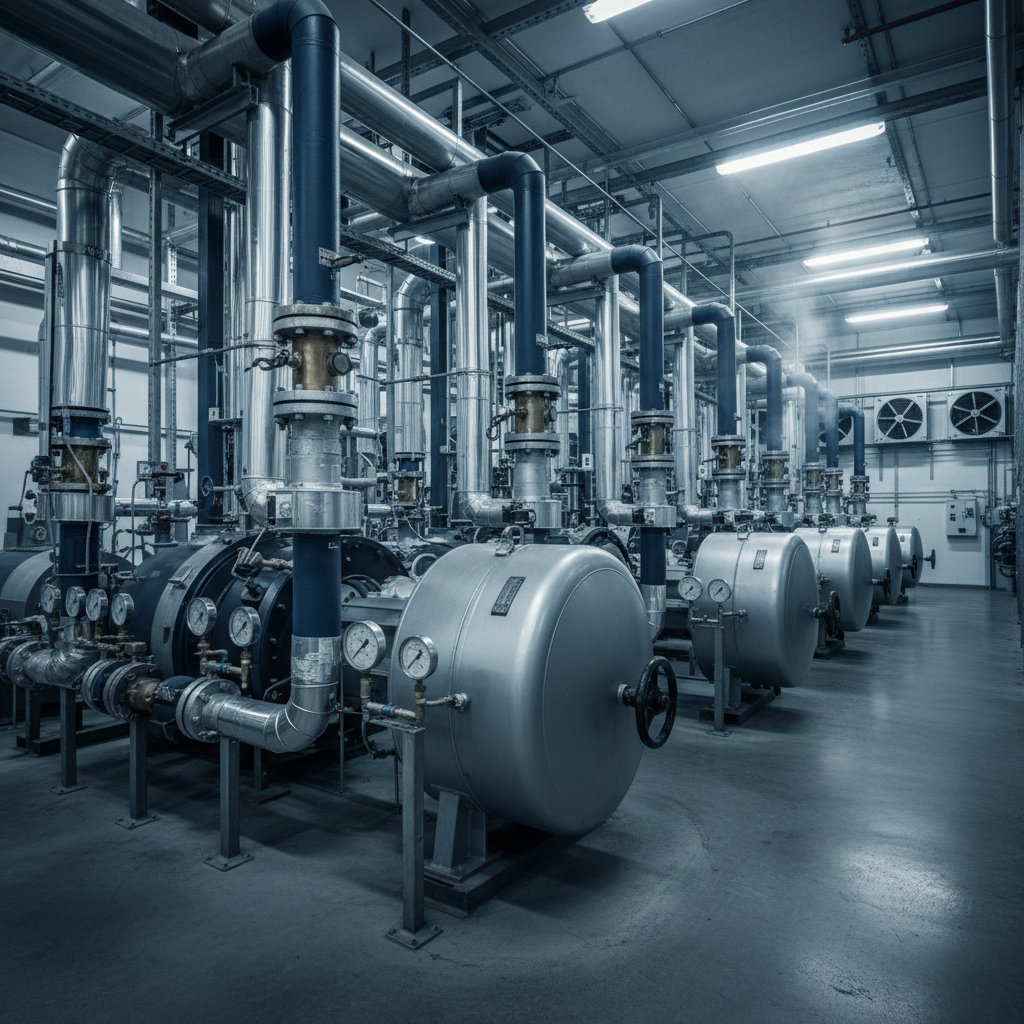
Thailand’s industrial landscape is defined by its climate. With average annual temperatures hovering between 26°C and 27°C and cooling degree days consistently exceeding 5,000 annually [1], the energy required to maintain strict temperature controls in cold storage, food processing, and pharmaceutical facilities is immense. For facility managers and engineers, refrigeration is not just a critical operational requirement; it is often the single largest line item on the facility’s energy bill.
As the Thai cold chain market expands—projected to reach USD 2.4 billion by 2026 [2]—the pressure to optimize these systems is intensifying. This pressure is compounded by rising energy costs. In April 2026, the Energy Regulatory Commission (ERC) approved a tariff increase to 3.95 baht per kilowatt-hour (kWh) for the May-August cycle [3]. In this environment, traditional reactive maintenance strategies are no longer financially viable. The industry is rapidly shifting toward predictive maintenance, leveraging data analytics and continuous monitoring to prevent failures before they occur and to sustain optimal energy efficiency.
The Physics of Performance Degradation
Refrigeration systems are governed by the laws of thermodynamics, and their efficiency is highly sensitive to operating conditions. The Coefficient of Performance (COP) is the standard metric for evaluating this efficiency, representing the ratio of cooling provided to electrical energy consumed. In Thailand’s tropical climate, maintaining a high COP is a constant battle against ambient heat and system wear.
When a system operates outside its optimal parameters, energy consumption spikes. For example, for every 1°F (approximately 0.56°C) reduction in condensing temperature, compressor input power is reduced by 1.5% to 2% [4]. Conversely, when ambient temperatures rise or heat exchangers become fouled, the compressor must work harder to achieve the same cooling effect.
A 2023 study published in Case Studies in Thermal Engineering quantified the impact of common faults on system performance. The researchers found that a 40% fouling of the condenser led to a 16% degradation in performance, while a 30% refrigerant leak caused a 12% drop [5]. When these faults occur simultaneously—a common scenario in aging facilities—the compounding effect on energy consumption is severe.
| Fault Type | Severity | Performance Degradation |
|---|---|---|
| Condenser Fouling | 40% | 16.0% |
| Refrigerant Leakage | 30% | 12.0% |
| Evaporator Fouling | - | 3.2% |
Table 1: Impact of common faults on refrigeration system performance [5].
These figures illustrate why reactive maintenance—waiting for a component to fail or for temperatures to drift out of range—is a costly strategy. By the time a problem is noticeable, the system has likely been operating inefficiently for weeks or months, silently inflating the electricity bill.
The Shift to Predictive Maintenance
Predictive maintenance represents a fundamental shift from time-based or reactive approaches to condition-based monitoring. By continuously analyzing data from sensors embedded in the refrigeration system, facility operators can identify the early warning signs of component degradation, refrigerant leaks, or heat exchanger fouling.
This approach relies on the integration of Internet of Things (IoT) technology and machine learning algorithms. A 2024 study in the International Journal of Electronics and Communication Engineering demonstrated that monitoring parameters such as energy consumption, pressure, and temperature allows for the early detection of malfunctions, enabling maintenance to be scheduled without unplanned downtime [6].
The benefits of this proactive approach extend beyond avoiding catastrophic failures. By ensuring that the system operates as close to its design specifications as possible, predictive maintenance sustains the COP and minimizes energy waste. According to the International Energy Agency (IEA), industrial facilities that implement comprehensive energy management systems typically achieve energy savings of around 11% within the first few years [7].
Real-World Outcomes: Case Studies in Efficiency
The theoretical benefits of predictive maintenance are compelling, but the true test is in real-world application. Several case studies highlight the measurable impact of continuous monitoring and proactive maintenance on energy consumption and system reliability.
Maruha Nichiro Logistics, Japan
In 2015, Maruha Nichiro Logistics upgraded the refrigeration equipment at its Kawasaki Logistics Center 1, installing eight new refrigeration units equipped with remote monitoring capabilities. The system's status was continuously transmitted to a central monitoring facility, allowing technicians to detect anomalies in real-time.
The results were significant. The facility achieved a 17.8% reduction in overall monthly electricity consumption. Furthermore, individual refrigeration devices demonstrated energy savings of approximately 20%. Across other centers in the company's network, similar implementations yielded reductions in electricity bills ranging from 15% to 18%, with some specific equipment achieving nearly 30% savings [8]. The key to this success was the ability to monitor performance continuously and intervene before efficiency degraded.
Heilig Hart Regional Hospital, Belgium
While not an industrial cold storage facility, the Heilig Hart Regional Hospital in Leuven, Belgium, provides a clear example of the value of predictive maintenance in critical cooling applications. In 2020, the hospital installed air-cooled chillers integrated with a remote monitoring system.
The continuous data stream enabled the early detection of a refrigerant leak in one of the chillers. Because the issue was identified proactively, technicians were able to refill the refrigerant and repair the leak within three weeks, completely avoiding any disruption to the hospital's critical cooling operations [9]. In a traditional reactive maintenance scenario, this leak would likely have gone unnoticed until the chiller failed to maintain the required temperature, potentially compromising sensitive medical equipment and incurring significant emergency repair costs.
Navigating the Thai Regulatory and Incentive Landscape
For facility owners in Thailand, the transition to predictive maintenance and high-efficiency refrigeration is supported by a robust framework of government incentives and regulations. Understanding these mechanisms is crucial for maximizing the return on investment.
The Department of Alternative Energy Development and Efficiency (DEDE) offers financial incentives for energy efficiency improvements in industrial facilities [10]. These programs are designed to offset the initial capital costs associated with upgrading equipment or installing advanced monitoring systems.
Furthermore, the Board of Investment (BOI) provides substantial tax incentives for investments in energy efficiency and automation. If an automation system—such as a predictive maintenance platform—incorporates a significant percentage of local content or supports the Thai automation industry, the investing company may be eligible for corporate income tax exemptions. These exemptions can last for up to three years, with a cap equivalent to 100% of the investment capital [11].
These incentives, combined with the rising cost of electricity, fundamentally alter the financial calculus of refrigeration maintenance. The cost of implementing a predictive maintenance system is increasingly offset by the combination of reduced energy bills, avoided downtime, and government tax benefits.
Conclusion
In the demanding climate of Thailand, industrial refrigeration is a high-stakes operation. The traditional approach of running equipment until it breaks or relying on rigid, calendar-based maintenance schedules is no longer sufficient. The hidden costs of performance degradation—driven by fouling, leaks, and ambient heat—are simply too high.
Predictive maintenance, powered by continuous monitoring and data analytics, offers a proven pathway to sustained efficiency and reliability. By addressing the root causes of COP degradation before they escalate, facility operators can protect their margins against rising electricity tariffs, ensure the integrity of their cold chain, and capitalize on government incentives. In an era where energy efficiency is synonymous with operational excellence, predictive maintenance is not just an upgrade; it is an essential strategy for survival and growth.
References
[1] World Bank Group. "Thailand - Climatology (CRU)." Climate Change Knowledge Portal. https://climateknowledgeportal.worldbank.org/country/thailand/climate-data-historical
[2] Mordor Intelligence. "Thailand Cold Chain Market Size & Share Analysis - Industry Research Report - Growth Trends." https://www.mordorintelligence.com/industry-reports/thailand-cold-chain-market
[3] The Pattaya News. "Electricity Tariffs in Thailand Will Rise By Only 1.8% for the May-August 2026 Period." April 2, 2026. https://thepattayanews.com/2026/04/02/electricity-tariffs-in-thailand-will-rise-by-only-1-8-for-the-may-august-2026-period/
[4] Energy Trust of Oregon. "Cold Storage Facilities Energy Savings Guide." December 2016. https://www.energytrust.org/wp-content/uploads/2016/12/ind_fs_guide_coldstorage.pdf
[5] Mauro, A. W., Pelella, F., & Viscito, L. "Performance degradation of air source heat pumps under faulty conditions." Case Studies in Thermal Engineering, 45, 103010. May 2023. https://doi.org/10.1016/j.csite.2023.103010
[6] Dandavate, A. L., et al. "Design of an Effective Refrigeration System with Predictive Maintenance by Integrating IoT and Machine Learning." International Journal of Electronics and Communication Engineering, 11(12), 113-120. December 2024. https://www.internationaljournalssrg.org/IJECE/2024/Volume11-Issue12/IJECE-V11I12P113.pdf
[7] International Energy Agency (IEA). "Energy Efficiency 2025." https://www.iea.org/reports/energy-efficiency-2025/industry
[8] Mayekawa Global. "Case study | NewTon | Distribution center Japan / Maruha Nichiro Logistics, Inc. Kawasaki Logistics Center 1." https://mayekawa.com/lp/newton/casestudy/04.html
[9] Daikin. "Maximizing Uptime and Energy Saving by Using Remote Monitoring at Heilig Hart Regional Hospital." https://www.daikin.eu/en_us/about/case-studies/maximizing-uptime-and-energy-saving-by-remote-monitoring.html
[10] United for Efficiency (U4E). "DEDE Financial Incentive for EE Thailand." https://united4efficiency.org/wp-content/uploads/2024/11/1-DEDE-Financial-Incentive-for-EE-Thailand.pdf
[11] Thailand Board of Investment (BOI). "A Guide to Investment in the Special Economic Zones." https://www.boi.go.th/upload/content/BOI-A-Guide-EN.pdf